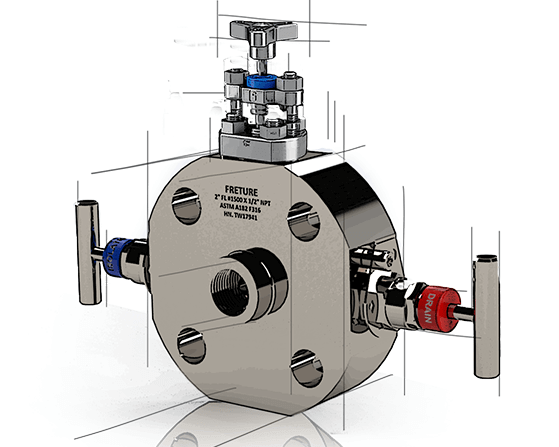
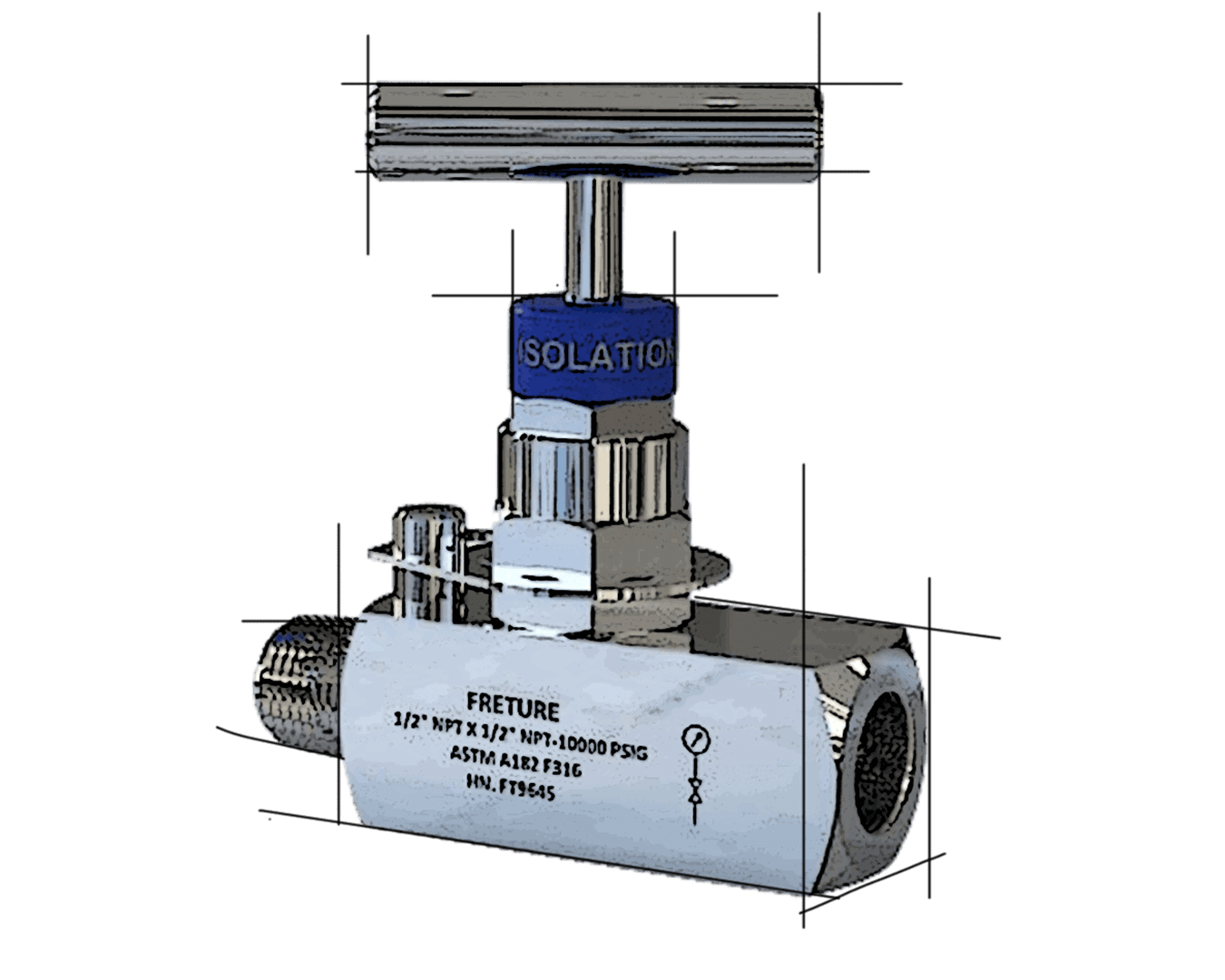
Selecting a reliable Needle valves manufacturer in Mumbai is important for industrial systems where precise flow control, pressure regulation and dependable isolation are required. Instrument needle valves are compact but highly functional components used in instrumentation lines, pressure measurement systems, sampling arrangements and process-control applications. Their small size should not be mistaken for low importance. A leakage issue, incorrect material selection or unsuitable pressure rating in an instrumentation system can affect measurement accuracy, process reliability and personnel safety. For this reason, quality engineering, appropriate materials, controlled manufacturing and proper testing are essential when selecting instrument needle valves for demanding industrial environments.
What Is an Instrument Needle Valve?
An instrument needle valve is designed to provide controlled flow through a small passage. Its tapered needle and matching seat allow the operator to regulate the opening gradually.
Compared with valves intended primarily for large process pipelines, instrument needle valves are generally used in smaller-bore instrumentation systems. They may be installed on pressure gauge lines, transmitters, impulse lines, manifolds, sampling systems and other instrumentation connections.
The ability to make controlled adjustments makes needle valves useful where precise flow restriction or isolation is required.
Why Precision Matters
Instrumentation systems are designed to provide operators and control systems with reliable information about process conditions. Pressure, temperature, flow and other parameters may be monitored using instruments connected through small-bore tubing and valves.
If an instrument valve leaks or does not provide the expected control characteristics, it can affect the integrity of the measurement system.
For this reason, dimensional accuracy, seat quality, stem design and material selection all matter.
Material Selection
Stainless steel is commonly considered for instrumentation applications because of its corrosion resistance and mechanical properties. However, the correct material depends on the process medium, pressure, temperature and environmental conditions.
Other materials or specialized alloys may be required for corrosive or demanding services.
The valve body, stem, bonnet, needle and seat should be evaluated as part of the complete valve design. Sealing materials must also be compatible with the service conditions.
Pressure and Leakage Considerations
Instrument systems can operate at significant pressures despite their small size. Therefore, pressure rating should never be determined simply by the valve's physical dimensions.
A suitable instrument needle valve should be selected according to the specified operating and design pressure, temperature and connection requirements.
Leak prevention is particularly important when instrumentation is connected to hazardous or volatile process media. Proper sealing and testing can help reduce the risk of unwanted releases.
Safety Should Never Be Compromised
Instrumentation valves are often installed close to equipment and process lines where operators and maintenance personnel work. A failure or leakage event can therefore create direct safety concerns.
This is why a responsible manufacturer must focus on pressure containment, material compatibility, dimensional accuracy and testing.
Cost is an important procurement consideration, but it should never override engineering requirements. When a valve is connected to a pressurized or hazardous process, quality should never be compromised because human safety depends on reliable containment.
FRETURE TECHNO PVT. LTD.
FRETURE TECHNO PVT. LTD. provides engineered valve solutions for industrial and process applications, including instrument and needle valve requirements.
Its broader portfolio includes Ball, Butterfly, Gate, Globe, Check, Plug, Bellow Seal, Lined, DBB, Control, Needle and Safety valves. The company serves industries including oil and gas, petrochemical, chemical, pharmaceutical, power, water treatment and general process applications.
FRETURE's quality management framework includes ISO 9001:2015, along with ISO 14001 and ISO 45001. Its head office is in Mumbai, with its manufacturing facility located in Gujarat.
Conclusion
Choosing an instrument valves manufacturer in Mumbai requires attention to more than size and price. Pressure rating, materials, connection type, sealing performance, dimensional accuracy and testing all influence valve reliability. Instrumentation may represent only a small part of a process plant, but reliable measurement and isolation depend on the performance of its supporting components. A properly engineered needle valve can contribute to precise control, dependable instrumentation and safer operations. Quality should never be compromised where process integrity, equipment protection and human life are involved.