Showing posts with label monoflange manufacturer. Show all posts

Friday, 8 May 2026

Why Monoflange Valves Are Replacing Conventional Multi-Valve Assemblies

Modern industrial processes demand compact, reliable, and maintenance-friendly valve solutions that improve operational safety while reducing installation complexity. In industries such as oil & gas, petrochemicals, power plants, and chemical processing, traditional multi-valve assemblies have been widely used for pressure instrumentation and process isolation systems.

However, these conventional assemblies often involve multiple fittings, connectors, and valves, increasing the risk of leakage, installation errors, and maintenance challenges. To overcome these issues, industries are increasingly shifting toward Monoflange Valves.

Monoflange valves provide a compact integrated solution that combines multiple valve functions into a single assembly, offering improved safety, reduced leak paths, and enhanced operational efficiency.

What is a Monoflange Valve?

A Monoflange Valve is a compact instrumentation valve assembly designed to integrate:

  • Isolation valves
  • Equalizing valves
  • Vent or bleed valves

into a single forged body construction.

These valves are commonly used with:

  • Pressure transmitters
  • Differential pressure transmitters
  • Gauge pressure systems
  • Process instrumentation lines

Monoflange valves simplify piping systems by eliminating the need for multiple separate valves and fittings.

Limitations of Conventional Multi-Valve Assemblies

Traditional multi-valve assemblies typically consist of:

  • Multiple valves
  • Pipe nipples
  • Connectors
  • Adapters
  • Threaded joints

While functional, these assemblies introduce several operational disadvantages.
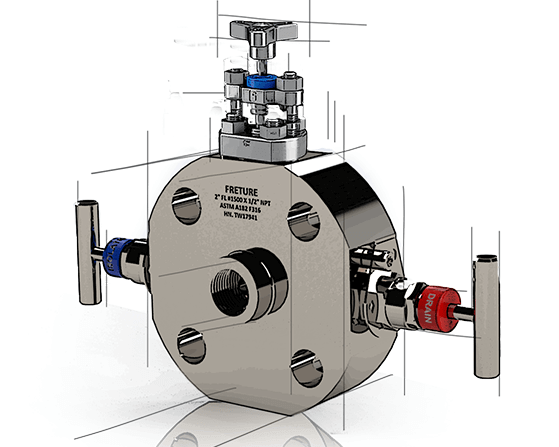


Common Challenges Include:

  • Increased leakage points
  • Larger installation space
  • Higher maintenance requirements
  • Complex assembly procedures
  • Greater vibration sensitivity
  • Increased weight on instrumentation systems

In critical applications, these issues can impact both safety and reliability.

Why Industries Are Switching to Monoflange Valves

1. Reduced Leak Paths

One of the biggest advantages of monoflange valves is the reduction in potential leak points.

Since the assembly is integrated into a single body:

  • Fewer threaded connections are required
  • Leakage risk is significantly minimized
  • Process safety improves

This is especially important in hazardous fluid and gas applications.

2. Compact and Lightweight Design

Monoflange valves occupy significantly less space compared to conventional assemblies.

Benefits include:

  • Easier installation
  • Reduced piping congestion
  • Lower structural load on transmitters
  • Improved accessibility

Compact designs are highly beneficial for offshore platforms and confined industrial areas.

3. Improved Safety Performance

Safety is a major reason industries prefer monoflange valves.

The integrated forged construction helps:

  • Improve pressure integrity
  • Reduce vibration-related failures
  • Enhance sealing reliability
  • Minimize fugitive emissions

This supports safer plant operations and compliance with industrial safety standards.

4. Faster Installation

Traditional multi-valve systems require assembly of multiple individual components.

Monoflange valves simplify installation by:

  • Reducing assembly time
  • Minimizing alignment issues
  • Lowering labor requirements

This helps industries reduce project execution time and installation costs.

5. Lower Maintenance Costs

With fewer components and connections, monoflange valves reduce:

  • Inspection requirements
  • Maintenance frequency
  • Replacement costs

Simplified maintenance also minimizes operational downtime.

Applications of Monoflange Valves

Monoflange valves are widely used in:

  • Oil & Gas Industries
  • Petrochemical Plants
  • Refineries
  • Power Generation Facilities
  • Chemical Processing Plants
  • Offshore Platforms
  • Instrumentation Systems

They are ideal for high-pressure and critical process applications.

Types of Monoflange Valves

Common monoflange configurations include:

  • 2-Valve Monoflange
  • 3-Valve Monoflange
  • 5-Valve Monoflange

Each configuration is selected based on instrumentation and process isolation requirements.

Key Features of Monoflange Valves

High Pressure Capability

Designed for demanding pressure applications.

Forged Body Construction

Provides superior mechanical strength and durability.

Compact Design

Optimizes installation space and reduces system complexity.

Leak-Tight Performance

Improves process safety and reliability.

Corrosion Resistance

Suitable for aggressive industrial environments.

Important Factors While Selecting Monoflange Valves

Industries should evaluate:

  • Pressure rating
  • Temperature range
  • Media compatibility
  • End connection type
  • Material selection
  • Instrumentation configuration

Common materials include:

  • Stainless Steel
  • Carbon Steel
  • Duplex Steel
  • Alloy Steel

Proper valve selection ensures long-term operational reliability.

Why Choose Freture Techno Pvt. Ltd. for Monoflange Valves?

Freture Techno Pvt. Ltd. offers precision-engineered monoflange valve solutions designed for critical industrial applications.

Their monoflange valves provide:

  • Compact integrated design
  • High-pressure performance
  • Reliable sealing
  • Corrosion resistance
  • Long operational life
  • Industry-standard manufacturing quality

Freture Techno focuses on delivering efficient and safe instrumentation valve solutions for modern process industries.

Conclusion

Monoflange valves are rapidly replacing conventional multi-valve assemblies due to their compact design, reduced leak paths, improved safety, and lower maintenance requirements.

As industries continue to prioritize operational efficiency and process reliability, monoflange valves have become an ideal solution for critical instrumentation and isolation applications.

Their integrated design not only enhances plant safety but also helps reduce installation complexity and long-term operational costs.

FAQ

What is a monoflange valve?

A monoflange valve is a compact integrated valve assembly used for instrumentation isolation and venting applications.

Why are monoflange valves preferred over conventional assemblies?

They reduce leak points, save installation space, improve safety, and lower maintenance costs.

Where are monoflange valves commonly used?

They are widely used in oil & gas, petrochemical, chemical, and power generation industries.

What materials are used for monoflange valves?

Common materials include stainless steel, carbon steel, duplex steel, and alloy steel.

Monday, 30 September 2024

Exploring the Versatility of Monoflange Valves in Critical Industries

 Monoflange valves are increasingly becoming a preferred choice in industries that demand compact, reliable, and efficient valve solutions. By consolidating multiple valve functions into one block, monoflange valves help industries achieve high performance while reducing costs and space requirements.

Types of Monoflange Valves

  1. Isolate and Vent Monoflange Valve: This type of valve is designed for safe isolation of instruments or equipment, along with a venting function for pressure release. It is widely used in processes that require instrument isolation and bleeding.

  2. Double Block and Bleed Monoflange Valve: With two isolation barriers and a central vent, this valve offers superior safety in high-pressure applications, making it essential for industries like oil and gas.

  3. Integral Valve Manifolds: These valves incorporate both isolation and equalization functions, often used in pressure gauge mounting applications.

Features of Monoflange Valves

  • Reduced Weight and Size: By integrating multiple functions, these valves drastically reduce the weight and size of a valve system, making them easier to install and maintain.

  • Safety Enhancement: Monoflange valves minimize the number of potential leak paths, enhancing the safety and reliability of the system.

  • Pressure Rating: Monoflange valves are designed to withstand high pressures, making them suitable for use in critical applications such as offshore platforms, chemical plants, and power generation facilities.

Advantages of Monoflange Valves

  1. Space Optimization: The compact nature of these valves allows for installation in areas with limited space, making them ideal for offshore platforms or confined process plants.

  2. Lower Installation Costs: Reduced size and fewer components lead to quicker installation times, reducing labor and material costs.

  3. High Durability: With fewer moving parts and high-grade materials, monoflange valves offer superior longevity and reduced maintenance needs.

Freture Techno Pvt. Ltd. – Your Trusted Monoflange Valve Manufacturer

Freture Techno Pvt. Ltd. is a trusted name in manufacturing monoflange valves in Mumbai, India. Their products are built with precision engineering and are tested to meet the highest quality standards, ensuring reliable performance in the most demanding conditions.

Saturday, 13 July 2024

Monoflange Valve: A Versatile Choice for Instrumentation

In the intricate world of industrial process control, ensuring precise measurement and regulation of various parameters is critical. Here's where monoflange valves come into play. These compact and efficient valves offer a unique solution for integrating pressure gauges, transmitters, and other instruments into pipelines. This article delves into the different types of monoflange valves, their functionalities, and the benefits they provide.

Breaking Down the Monoflange Design:

A monoflange valve consists of a single flanged body that integrates a block valve, a bleed valve, and sometimes a vent port. The block valve allows for isolation of the instrument from the main pipeline for maintenance or calibration purposes. The bleed valve enables controlled venting of any trapped pressure before or after isolation. The vent port, when present, offers an additional pathway for pressure release.

Monoflange DBB Valves Manufacturers in India

Types of Monoflange Valves:

Monoflange valves come in two primary configurations:

  • Block and Bleed (DBB) Monoflange Valve: This is the most common type, featuring two block valves (one upstream and one downstream) and a bleed valve in between. It offers the highest level of isolation and safety when working with instruments.
  • Single Block and Bleed Monoflange Valve: This version features a single block valve and a bleed valve. It is a more compact and cost-effective option for applications where complete isolation might not be as critical.

Benefits of Monoflange Valves:

Several advantages make monoflange valves a compelling choice for instrument installations:

  • Compact Design: The integration of multiple functions into a single unit saves space and simplifies installation compared to using separate valves and fittings.
  • Enhanced Safety: The double block and bleed configuration ensures safe isolation and controlled pressure release during instrument maintenance.
  • Reduced Leak Potential: Minimized connection points lead to a lower risk of leaks compared to using multiple valves and fittings.
  • Ease of Use: The simple design allows for straightforward operation and maintenance.
  • Cost-Effectiveness: Monoflange valves offer a cost-efficient solution compared to using separate valves and fittings, especially when considering installation and maintenance time.

Applications of Monoflange Valves:

Monoflange valves find application in various industries for instrument integration, including:

  • Oil & Gas: Monitoring pressure, flow, and temperature in pipelines and processing units.
  • Chemical Processing: Controlling pressure and flow of chemicals in processing plants.
  • Power Generation: Monitoring critical parameters in boilers and turbines.
  • Water Treatment Facilities: Regulating water flow and pressure within treatment systems.
  • HVAC Systems: Monitoring pressure and temperature within heating and cooling systems.

Choosing the Right Monoflange Valve:

Selecting the appropriate monoflange valve for your application requires considering factors like pressure rating, material compatibility with the process fluid, and the level of isolation needed. Consulting with a qualified valve supplier can ensure you choose the optimal monoflange valve for your specific needs.

Monoflange Valves: A Versatile Solution

Monoflange valves, with their compact design, enhanced safety features, and ease of use, have become a preferred choice for instrument integration across diverse industries. Whether you require a DBB monoflange valve for maximum isolation or a single block and bleed version for a more cost-effective solution, these valves offer a reliable and efficient approach to instrument installation and maintenance.

Looking for high-quality monoflange valves? Freture Techno Pvt. Ltd., a leading Monoflange Valves manufacturer in Mumbai, India, offers a comprehensive range of monoflange valves designed and built to meet your specific needs and industry standards. Visit their website or contact them today to explore their selection and find the perfect monoflange valve solution for your instrumentation requirements.

Monday, 8 July 2024

Monoflange DBB Valves : Key Features and Benefits

Monoflange DBB Valves are essential components in industrial instrumentation and process control systems, offering significant advantages over traditional multiple valve assemblies. Designed to simplify installation, reduce potential leak paths, and minimize weight and space requirements, they play a crucial role in ensuring the safety, reliability, and efficiency of fluid and gas handling processes.

1. Compact Design and Space Efficiency

One of the primary advantages of this vlaves is their compact design. Unlike traditional double block and bleed (DBB) valve assemblies, which require multiple valves and fittings, Monoflange DBB Valves integrate all necessary functions into a single compact unit. This streamlined design not only reduces the overall footprint but also simplifies installation and maintenance tasks. In industries where space is limited or weight considerations are critical, such as offshore platforms or compact process skids, they offer a significant advantage by optimizing space utilization and minimizing structural load.

Monoflange Double Blockn and Bleed Valves Manufacturers in India

2. Reduced Potential Leak Paths and Enhanced Safety

Monoflange DBB Valves feature fewer potential leak paths compared to conventional valve assemblies, thereby enhancing system safety and reliability. By eliminating multiple connections and potential leakage points associated with traditional setups, they reduce the risk of fugitive emissions and fluid leaks. This characteristic is particularly beneficial in applications where toxic, hazardous, or high-pressure fluids are handled, ensuring compliance with stringent safety standards and regulations. Additionally, the reduced number of components simplifies inspection and maintenance procedures, facilitating quicker turnaround times and minimizing operational downtime.

3. Versatility and Flexibility in Applications

They are versatile components suitable for a wide range of applications across various industries, including oil and gas, chemical processing, power generation, and pharmaceuticals. They can be used for isolation, calibration, venting, or sampling purposes, depending on the specific requirements of the process or system. Their adaptability makes them ideal for both static and dynamic pressure measurement points, providing flexibility in system design and configuration.

4. Enhanced Operational Efficiency and Cost Savings

In addition to improving safety and reliability, they contribute to enhanced operational efficiency and cost savings. Their simplified design reduces installation time and labor costs, while also minimizing the need for extensive piping and manifold systems. Furthermore, the robust construction of this valves, often using materials such as stainless steel or alloy steels, ensures durability and longevity, reducing lifecycle costs associated with maintenance and replacement.

5. Compliance with Industry Standards and Regulations

They are designed and manufactured in accordance with international standards and industry regulations, ensuring compatibility with existing systems and adherence to quality and safety guidelines. Manufacturers often subject monoflange to rigorous testing procedures to verify performance under various operating conditions, providing assurance of reliability and longevity in demanding industrial environments.

Freture is a leading Monoflange DBB Valves manufacturer in Mumbai, India, renowned for its commitment to quality, innovation, and customer satisfaction. With a focus on delivering high-performance monoflange that meet the stringent requirements of modern industrial applications, Freture ensures optimal safety, reliability, and efficiency in fluid and gas handling processes. Whether for offshore installations, chemical plants, or pharmaceutical facilities, Freture's Techno is trusted solutions that exemplify excellence in instrumentation technology.

Why Monoflange Valves Are Replacing Conventional Multi-Valve Assemblies

Modern industrial processes demand compact, reliable, and maintenance-friendly valve solutions that improve operational safety while reducin...